50/30/20 Budgeting Rule: A Smarter Way to Manage Your Money
50/30/20 budgeting rule strategies have become one of the most effective ways to manage personal finances without feeling overwhelmed or restricted. For many people, traditional budgeting fails, not because they lack discipline, but because the systems they follow are simply too rigid and unrealistic for everyday life.
Think about it. Most budgeting advice tells you to track every single expense, cut out small indulgences like coffee, and stick to strict spending limits. While this may sound good in theory, it often leads to budgeting fatigue. People feel deprived, frustrated, and eventually abandon the plan entirely within weeks.
The truth is, a successful financial system must be sustainable. It must work with your lifestyle, not against it.
That’s where the 50/30/20 budgeting rule stands out. Instead of forcing you to micromanage every rand, it provides a flexible, percentage-based framework that prioritizes your needs, allows for enjoyment, and ensures consistent wealth building.
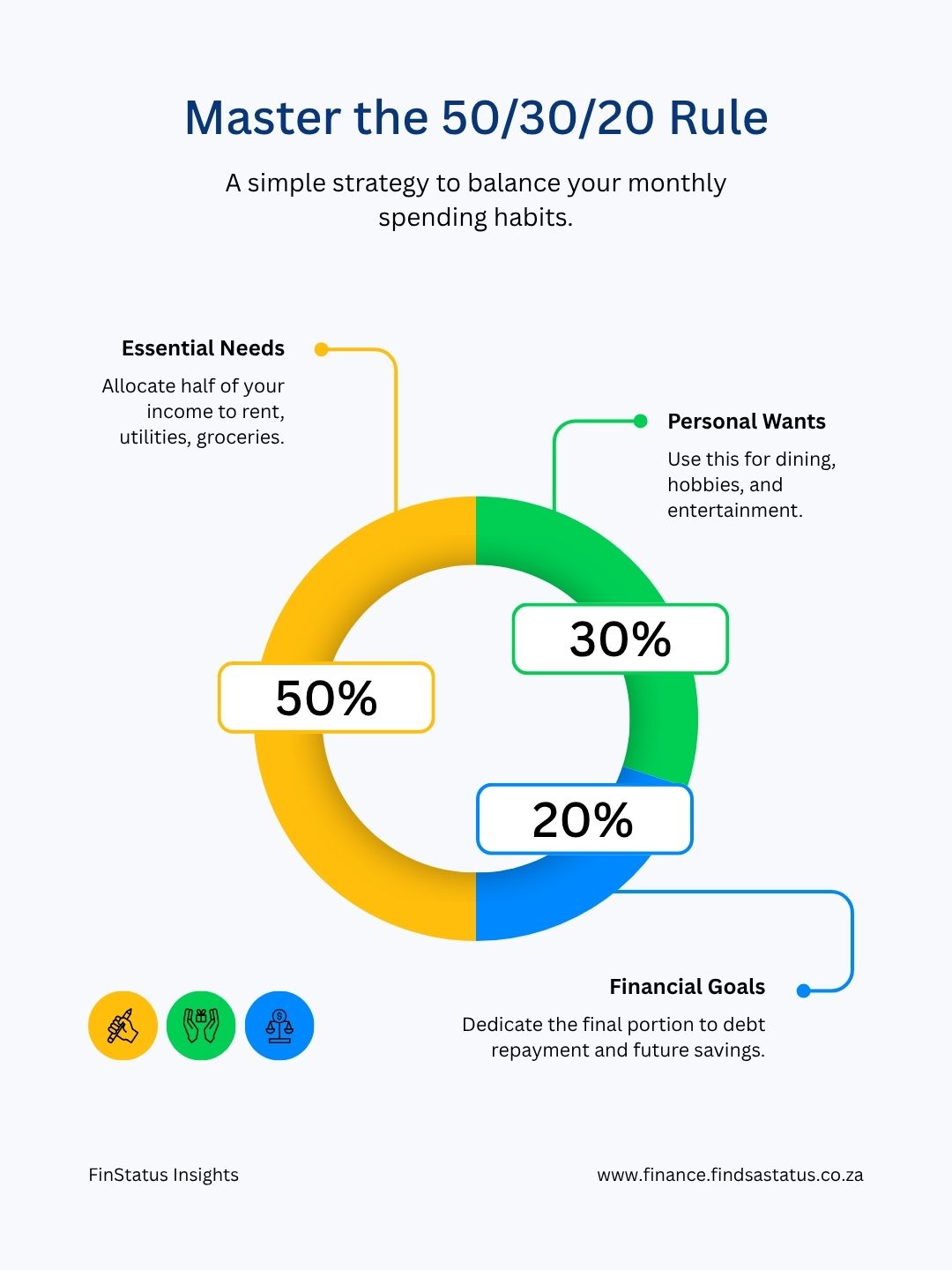
This simple yet powerful rule divides your after-tax monthly income into three key buckets:
- 50% for Needs
- 30% for Wants
- 20% for Savings and Investments
It’s not about restriction, it’s about structure, balance, and long-term consistency.
How the 50/30/20 Budgeting Rule Works in Real Life
To fully understand the power of the 50/30/20 budgeting rule, it helps to visualize how your income is allocated:
Income Breakdown Example
- 50% → Essential living expenses
- 30% → Lifestyle and personal enjoyment
- 20% → Savings, investments, and wealth building
This structure creates a financial ecosystem where survival, lifestyle, and future growth are all balanced in a sustainable way.
1. 50/30/20 Budgeting Rule: 50% for Essential Needs
The first and most important part of the rule is allocating 50% of your income toward needs. These are the expenses you cannot avoid, the costs required to maintain your basic standard of living.
What Falls Into “Needs”?
- Rent or mortgage payments
- Groceries and household essentials
- Utility bills (electricity, water, internet)
- Transport (fuel, public transport)
- Medical aid and insurance
- Minimum debt repayments
This category ensures your financial foundation remains stable. If this portion is not properly managed, everything else becomes difficult to sustain.
Why the 50% Rule Matters
Keeping your essential expenses within 50% creates financial breathing room. It ensures you are not overextending yourself on fixed costs.
If your needs exceed 50%, it’s often a sign of structural imbalance. You may be paying too much for housing, carrying excessive debt, or maintaining a lifestyle that stretches your income.
This is where long-term financial awareness becomes important. Adjusting these costs, whether by downsizing, renegotiating, or consolidating, can free up money for savings and investments.
2. 50/30/20 Budgeting Rule: 30% for Lifestyle Wants
One of the biggest reasons people fail at budgeting is because they remove enjoyment from the process.
The 50/30/20 budgeting rule solves this by intentionally reserving 30% of your income for wants, things that make life enjoyable and meaningful.
Examples of Wants
- Dining out and takeaways
- Social activities and entertainment
- Subscriptions (Netflix, Spotify, gym)
- Shopping for personal items
- Travel and leisure
Why This Category Is Essential
This category is not a luxury, it is a necessity for sustainability.
When people cut out all “wants,” they often feel restricted. Over time, this leads to impulsive spending or abandoning the budget entirely. By allocating 30% upfront, you give yourself permission to enjoy your money, without guilt.
It creates a healthy psychological balance. You are not just surviving; you are living.
3. 50/30/20 Budgeting Rule: 20% for Savings and Investments
This is where the real wealth-building power of the 50/30/20 budgeting rule lies.
The final 20% of your income is dedicated to your future, your security, your independence, and your long-term financial growth.
Where Should This 20% Go?
- Emergency fund (3–6 months of expenses)
- Tax-Free Savings Accounts (TFSA)
- Retirement investments
- Index funds or ETFs
- Debt reduction beyond minimum payments
The Golden Principle: Pay Yourself First
Instead of saving what’s left at the end of the month, this rule forces you to save first.
The moment you receive your income, that 20% should be automatically transferred into savings or investments.
This removes the need for discipline. It turns saving into a system instead of a decision.
Why the 50/30/20 Budgeting Rule Works So Well
Unlike traditional budgeting systems, the 50/30/20 budgeting rule works because it balances structure and flexibility.
1. It Reduces Financial Stress
You no longer need to track every transaction in detail. The percentages act as a guideline, keeping things simple and manageable.
2. It Aligns With Human Behavior
People are more likely to stick to a system that allows flexibility. This method respects real-life spending habits instead of trying to control them completely.
3. It Builds Wealth Automatically
By consistently allocating 20% toward savings and investments, you are steadily growing your financial position over time.
4. It Creates Long-Term Consistency
Consistency is the foundation of financial success. This rule helps you stay consistent without feeling overwhelmed.
How to Apply the 50/30/20 Budgeting Rule in South Africa
For South African users, the 50/30/20 budgeting rule becomes even more powerful when paired with smart financial tools and platforms like OG365capital.co.za.
You can:
- Track your income and expenses digitally
- Automate your savings and investments
- Gain insights into your financial habits
For broader financial guidance, you can also explore:
- https://www.investopedia.com/budgeting-4689745
- https://www.nerdwallet.com/article/banking/compound-interest
Common Mistakes When Using the 50/30/20 Budgeting Rule
❌ Trying to Be Perfect: You don’t need to follow the rule exactly every month. Consistency matters more than perfection.
❌ Ignoring High Fixed Costs: If your “needs” exceed 50%, the solution is not cutting wants, it is adjusting your fixed expenses.
❌ Not Automating Savings: If saving relies on willpower, it will fail. Automation is key.
How to Adjust the 50/30/20 Budgeting Rule for Your Situation
Life is not one-size-fits-all. You can modify the rule slightly based on your stage of life:
- Higher debt → Increase savings/debt portion (e.g., 25%)
- Low income → Temporarily reduce wants
- High income → Increase investments beyond 20%
The framework is flexible, it should adapt to you.
Final Thoughts on the 50/30/20 Budgeting Rule
The 50/30/20 budgeting rule is not just about numbers, it’s about creating a system that actually works in the real world. It removes the complexity of traditional budgeting and replaces it with a balanced approach that supports both your present lifestyle and your future goals.
By dividing your income into clear categories, you eliminate guesswork and gain confidence in your financial decisions. You know your essentials are covered, your lifestyle is supported, and your future is funded, all at the same time.
In a financial world where many people feel overwhelmed, this rule offers clarity. It simplifies money management into something that is not only achievable but sustainable over the long term.
Whether you are just starting your financial journey or looking to improve your current system, the 50/30/20 budgeting rule provides a reliable foundation for building wealth while still enjoying your life.
